Module 9.1 - Blood and It's Components
Blood is the transport system of the body, responsible for carrying most of the nutrients and wastes. In this module, you will review some of blood's most important qualities.
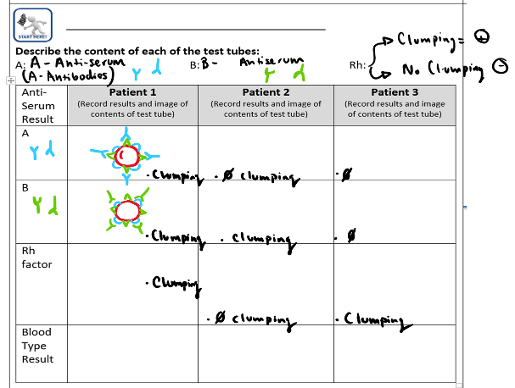
- Use the clues in the image to determine the blood types of the 3 patients...
Essential Vocab:
buffy
coat, hematocrit, plasma, albumin, formed elements, erythrocytes (red blood
cells), hemoglobin, globin, heme, oxyhemoglobin, deoxyhemoglobin,
carbaminohemoglobin, hematopoiesis, red bone marrow, hemocytoblast, hematopoietic
stem cell, erythropoiesis, myeloid stem cell, proerythroblast, normblast,
reticulocyte, erythropoietin, ferritin, hemosiderin, transferrin, bilirubin,
anemia, thalassemias, sickle cell anemia, polycythemia, leukocytes, diapedesis,
amoeboid motion, positive chemotaxis, leukocytosis, granulocytes, neutrophils,
defensins, polymorphonuclear leukocytes, respiratory burst, eosinophils,
basophils, agranulocytes, lymphocytes, T lymphocytes, B lymphocytes,
antibodies, monocytes, macrophages, leukopoesis, interleukins, colony
stimulating factors, lymphoid stem cells, myeloid stem cells, myeloblasts,
promyelocytes, mylocytes, band cell, monoblast, promonocytes, lymphoblasts,
prolymphocyte, leukopenia, platelets, megakaryocytes, thrombopoietin,
megakaryoblast, hemostasis, vascular spasm, prostacyclin, serotonin,
coagulation, clotting factors, procoagulants, prothrombin activator,
fibrinogen, fibrin, anticoagulants, clot retraction, serum, platelet derived
growth factor, fibrinolysis, plasmin, plasminogen, thrombus, embolus, embolism,
aspirin, warfarin, thrombocytopenia, hemophilia, agglutinogens, ABO blood
groups, agglutinins, Rh factor, plasma expanders, differential white blood cell
count, prothrombin time, platelet
Module Objectives:
Overview: Blood Composition and Functions
1. Describe the composition and physical characteristics of whole blood. Explain why it is classified as a connective tissue.
2. List eight functions of blood.
Blood Plasma
3. Discuss the composition and functions of plasma.
Formed Elements
4. Describe the structure, function, and production of erythrocytes.
5. Describe the chemical makeup of hemoglobin.
6. Give examples of disorders caused by abnormalities of erythrocytes. Explain what goes wrong in each disorder.
7. List the classes, structural characteristics, and functions of leukocytes.
8. Describe how leukocytes are produced.
9. Give examples of leukocyte disorders, and explain what goes wrong in each disorder.
10. Describe the structure and function of platelets.
Hemostasis
11. Describe the processes of hemostasis. List factors that limit clot formation and prevent undesirable clotting.
12. Give examples of hemostatic disorders. Indicate the cause of each condition.
Transfusion and Blood Replacement
13. Describe the ABO and Rh blood groups. Explain the basis of transfusion reactions.
14. Describe fluids used to replace blood volume and the circumstances for their use.
Diagnostic Blood Tests
15. Explain the diagnostic importance of blood testing.
Developmental Aspects of Blood
16. Describe changes in the sites of blood production and in the type of hemoglobin produced after birth.
17. Name some blood disorders that become more common with age.